Why is my dog reactive? It's a very common question, one of the most common questions that I get from owners I'm working with and from owners where I'm evaluating their dog. Several times per week I answer this so it makes sense to answer it here as well.
Nature at work
As with most things dog, it does kind of depend on a couple of things. The first is that it's often nature at work. Our dogs don't do things without a purpose so if they feel like something works for them or they feel like they need to do it, they're going to do it. Some dogs simply don't have the genetic predisposition for certain behaviors and reactivity is one of them but most of them do. Some of them have a stronger genetic predisposition than others.
Herding breeds are a good example because their job historically required them to spring to action, bark, lunge, growl, stare, and sometimes even use their teeth. That's because that's how you handle stock animals to keep them in line. The stock animals (goats, sheep, and cows typically) have a tendency to get a little squirrely and start going in places that they're not supposed to and the dog needs to keep order. They need to keep them together and they need to keep them from getting a little too big for their britches as it were.
Historical genetic jobs: they were purposely bred for this. Now we've taken most of these dogs out of that purpose and haven't replaced it with anything that still fits that genetic temperament and that breed history.
A lack of order and purpose
Two is that oftentimes our dog simply doesn't know what they're supposed to be doing so they start finding things to do. As humans we think with a human brain. We think if we keep our dogs having fun all the time, if we give them free access to basically everything, the dog will be satisfied and happy and never want for anything.
Retirement tends to be bad for all living beings and we have a tendency to retire our dogs at a young age. The dog door, free access to the couch, no rules around the house, and no clarity with the dog as to what we want or don't want have a tendency to set a dog up for reactivity.
If we compound the issue by taking the dog to daycares and dog parks, where it either has a great time or maybe not a great time, we also increase the likelihood that we're going to start getting those meltdowns on leash (at least when it comes to seeing other dogs). A lack of order, a lack of purpose, a lack of general obedience, as well as genetic predisposition, all lead to the likelihood of reactive meltdowns when faced with common triggers, dogs being the most common. There are, of course, other environmental triggers, such as people wearing dark sunglasses and hats, which is another common one.
The way out
The way out of this is to fulfill our dogs in a way that makes sense for them:
- Retrieving games with a little bit of a mental challenge for our retrieving breeds
- Scent games are also great
- Playing tug with rules
- Playing fetch with rules
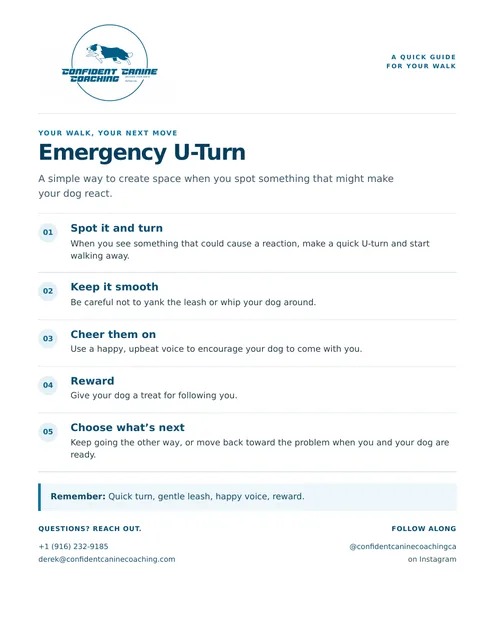
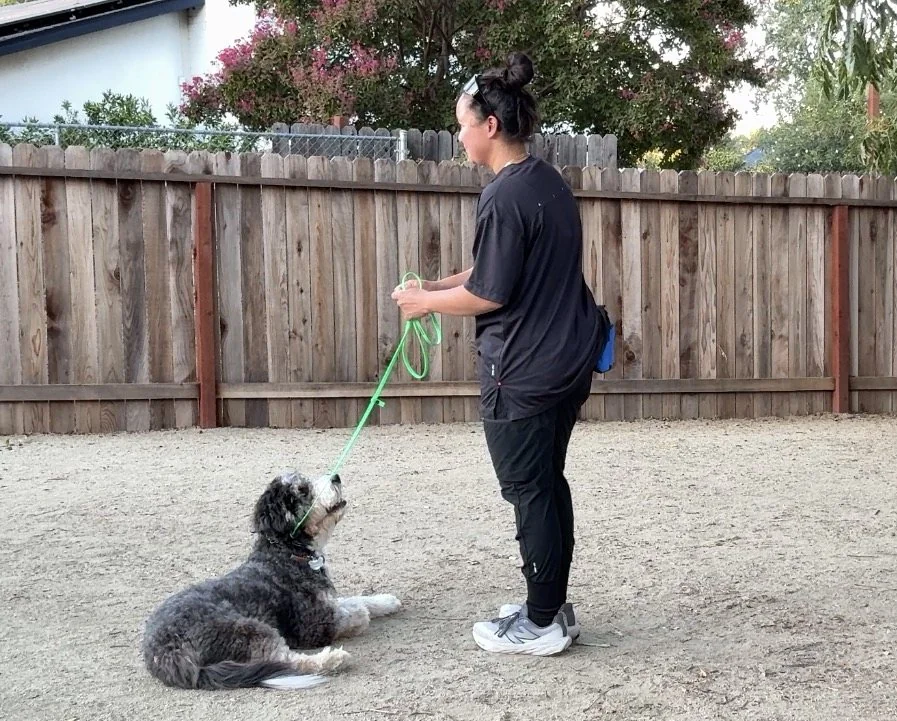
- Instilling some degree of order around the house while also improving our dog's leash walking manners has a tendency to do wonders
It's often quite a simple fix but it's not always the easiest fix. The longer it goes on, the harder it's going to be to get to a satisfactory place with our dog's behavior.